
金砖SEZ学堂·“赢在金砖”留学生赋能营绿色建筑新技术实践活动
Introduction
近日,金砖SEZ学堂·“赢在金砖”留学生赋能营绿色建筑新技术实践活动顺利举行。我校金砖伙伴国来华留学生们走进杭州钱塘区零碳智能标杆企业——焱唐能源科技有限公司,实地感受绿色未来工厂的低碳实践,近距离接触颠覆性创新光伏建材产品,并围绕金砖国家建筑发展趋势与新材料市场需求展开热烈研讨。
Recently, the green building new technology practice activity of the BRICS SEZ Academy -BRICS Win-Win International Student Empowerment Camp was successfully held. International students from BRICS partner countries of Zhejiang University of Technology visited Yantang Energy Technology Co., Ltd., a zero-carbon intelligent benchmark enterprise in Qiantang District, Hangzhou. They experienced the low-carbon practices of a Green Future Factory on site, got a close look at disruptive innovative photovoltaic building materials, and held lively discussions on the development trends of green buildings in BRICS countries and market demand for new materials.
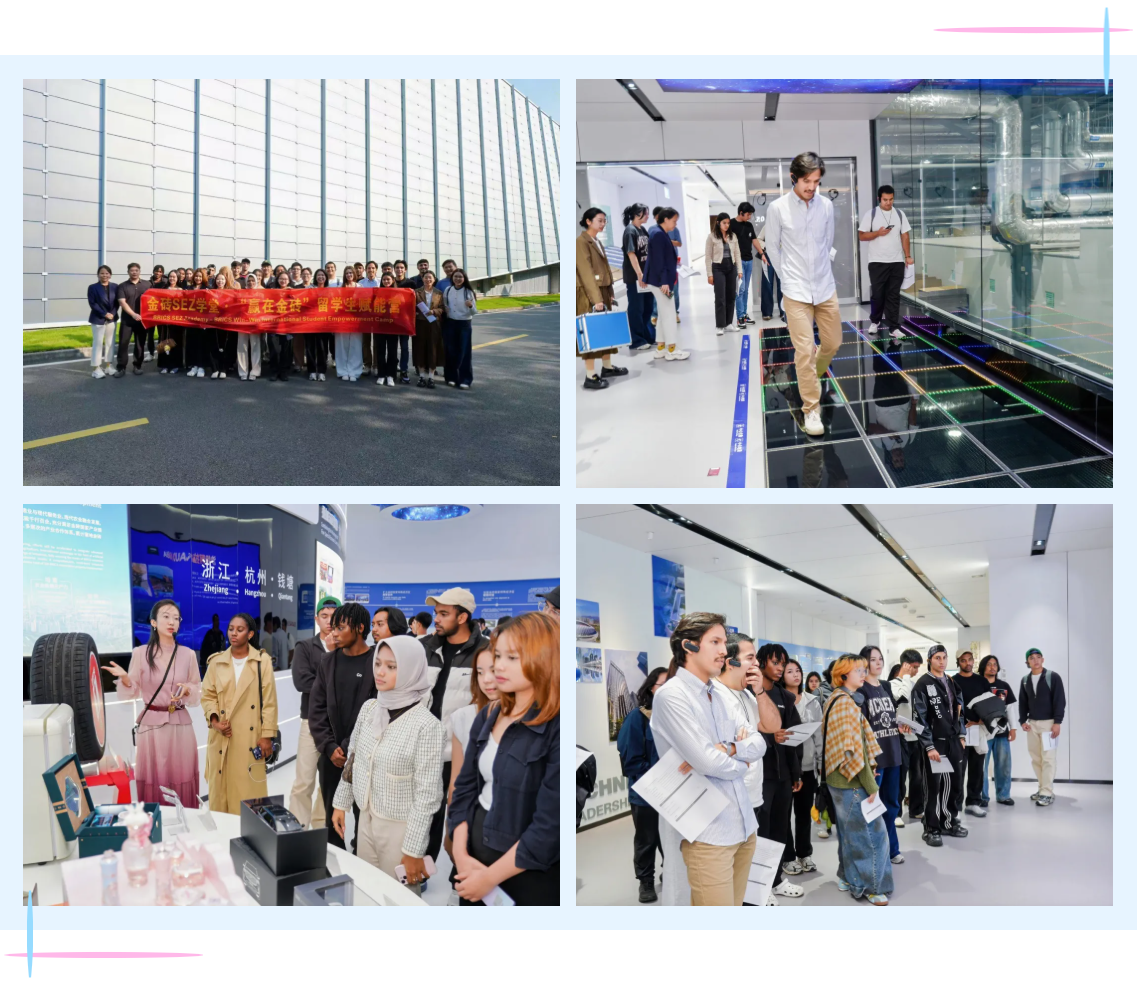
零碳智能工厂,体验“绿色未来工厂”
Zero-Carbon Smart Factory: Experiencing the “Green Future Factory”
当天下午,来华留学生抵达焱唐能源科技有限公司。在讲解人员的带领下,首先参观了焱唐绿色建筑体验区和浙江省绿色工厂。
In the afternoon, the international students arrived at Yantang Energy Technology Co., Ltd. Guided by the staff, they first visited the Yantang Green Building Experience Zone and the Zhejiang Provincial Green Factory.
焱唐以打造“绿色未来工厂”为核心抓手,持续推进低碳改造与数智化升级。参观过程中,学生们直观了解了企业如何将环保、绿色、循环利用理念贯穿研发、生产、回收与产品应用全链条,也进一步认识到碲化镉光伏不仅是低碳能源产品,更是环保产品。从生产流程到绿色建筑应用场景,留学生们边走、边看、边问,对“绿色制造”有了更具体的感知。
With building a “Green Future Factory” as its core focus, Yantang has continued to advance low-carbon transformation and digital-intelligent upgrading. During the visit, the students gained an intuitive understanding of how the company integrates the concepts of environmental protection, green development, and recycling throughout the entire chain of R&D, production, recycling, and product application. They further recognized that cadmium telluride (CdTe) photovoltaics are not only low-carbon energy products but also environmentally friendly products. From production processes to green building application scenarios, the international students walked, observed, and asked questions along the way, gaining a more concrete perception of “green manufacturing”.
交流现场,解锁“会发电的彩色玻璃”
The Exchange Session: Unlock the “Power-Generating Colored Glass”
此次活动不仅有企业方的技术分享环节,还有留学生们轮番提问的现场问答与交流环节。色彩鲜艳的玻璃居然还能发电,这让不少留学生感到新奇。技术人员解释了真空镀膜技术如何兼顾色彩与透光率,燚彩将色彩与发电功能完美融合,其独特之处在于采用特有的真空镀膜技术,面对“会发电的彩色玻璃”,留学生们表现出浓厚兴趣,围绕技术原理、应用场景和成本等问题与企业技术人员深入交流,把问题引向更实际的地方,现场气氛热烈。
This activity not only included a technology-sharing session by the company, but also an on-site Q&A and exchange session in which the international students took turns asking questions. Colored glass that can actually generate electricity surprised many international students. Technical staff explained how vacuum coating technology balances color and light transmittance. Yicai perfectly integrates color and power generation functions, and its uniqueness lies in the use of proprietary vacuum coating technology. Faced with “colored glass that can generate electricity”, the international students showed strong interest. They engaged in in-depth exchanges with the company’s technical staff on technical principles, application scenarios, costs, and other issues, steering the questions toward more practical matters. Questions were raised one after another, and the atmosphere on site was much livelier than expected.
主题研讨,共话金砖国家绿色建筑未来
Thematic Discussion: Talking Together About the Future of Green Buildings
围绕“金砖国家建筑发展趋势与新材料市场需求”,留学生们结合各自国家的气候条件、建筑风格和新能源政策,谈光伏建材的适配性,也谈彩色光伏玻璃的市场接受度,主题研讨充分且深入。
Around the theme “Building Development Trends in BRICS Countries and Market Demand for New Materials,” the students combined the climate conditions, architectural styles, and new energy policies of their respective countries to discuss the adaptability of photovoltaic building materials and the market acceptance of colored photovoltaic glass.
此次实践学习,让来华留学生对绿色建筑、薄膜光伏和新材料产业有了更直观的认识,也让金砖国家绿色合作的“未来图景”变得可感可触。未来,学院将继续深化校企协同育人,拓展产业实践合作领域,为深化绿色低碳合作、促进青年交流互鉴提供人才支撑。
This practical learning experience gave international students a more intuitive understanding of green buildings, thin-film photovoltaics, and the new materials industry, and made the “future vision” of BRICS green cooperation tangible and within reach. The college will continue to deepen university-enterprise collaborative education and expand practical cooperation in the green industry, providing talent support for deepening green and low-carbon cooperation and promoting youth exchanges and mutual learning.
- 还没有人评论,欢迎说说您的想法!